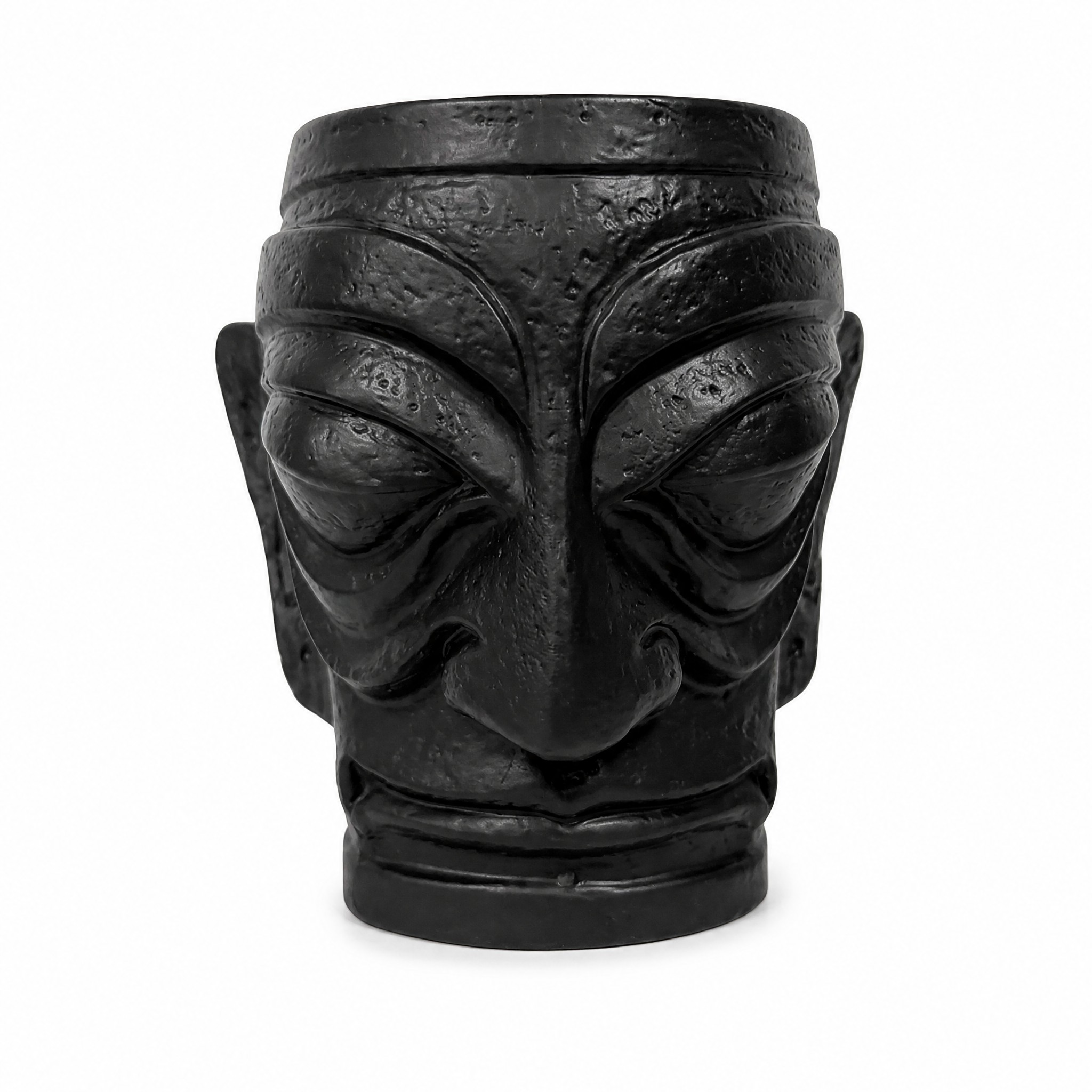
Every custom ceramic program starts with the same question from the buyer side: “Why does the tooling fee cost what it costs — and why can’t we just open one mold and run the whole order from it?” It is a fair question, and the honest answer is structural. A ceramic mold is not a steel injection mold that survives a million shots. It is a porous plaster working mold that is consumed by the very process it enables — so a ceramic factory must build a hierarchy of tooling before a single sellable mug exists.
This guide breaks down exactly where a ceramic OEM mold fee goes: the three-tier tooling architecture, the four design variables that move the price most, real-world cost benchmarks for custom mugs and vessels, and how Dehua Fugu Ceramics structures mold fee refunds so that tooling becomes a recoverable investment rather than sunk cost.
Key Takeaways
- You never buy “one mold.” You buy a master model, a mother mold, and a set of consumable plaster working molds.
- Plaster working molds die after roughly 60–80 slip casts. A 3,000-piece order may consume 40+ working molds, all pulled from the same mother mold.
- Split-line count is the single biggest cost driver. A 2-piece mold and a 6-piece mold for the same volume can differ by 4x in tooling cost.
- Tooling is refundable. Cumulative orders of 3,000–5,000 pcs return 100% of the mold fee at Fugu Ceramics. Low MOQ 500 pcs to start.
What a Ceramic Mold Fee Actually Buys
When a brand receives a quotation with a line item reading “mold fee: USD 850,” that number is not a single purchase. It is the sum of a short engineering supply chain that has to be built, tested, corrected and then duplicated. In practice the fee covers five cost centres:
- Engineering and DFM review — parting-line strategy, draft analysis, shrinkage compensation and wall-thickness normalisation on the buyer’s 3D file.
- Master model fabrication — CNC machining or resin printing of the positive master, hand-finished to a mirror surface because every defect is inherited downstream.
- Mother mold (block mold) production — the reusable silicone or plaster case mold that defines the geometry for all future working molds.
- Working mold set — the actual production plaster molds, multiplied by the number of split pieces and by the number of sets needed to run the batch.
- Sampling and iteration — first-article slip casting, bisque firing, glazing, 1310°C firing, shrinkage measurement and one round of correction.
Understanding this stack is what allows a buyer to negotiate intelligently: the master model and mother mold are one-time, geometry-bound costs, while working molds are volume-bound consumables. A supplier quoting an unusually low tooling fee is almost always quoting a single working mold set with no mother mold — which means no replenishment when the molds wear out mid-order.
The 3-Tier Tooling Architecture: Master Model, Mother Mold, Production Working Molds
Ceramic slip casting is a destructive manufacturing method for the tool. Gypsum plaster absorbs water from the slip by capillary action; after every cast the mold must dry, and after every dry cycle it loses a fraction of its porosity and dimensional accuracy. The industry-standard service life of a plaster working mold is 60–80 slip casts before the cast surface starts to show dimpling, seam creep and shrinkage drift.
That single fact dictates the entire tooling hierarchy:
| Tier | What It Is | Service Life | Role in the Program |
|---|---|---|---|
| Tier 1 — Master Model | Positive replica of the mug, CNC-machined from tooling resin or cast from a printed pattern; hand-polished and scaled up for shrinkage. | Permanent (stored, reusable) | The legal definition of your product. Every future mold is a copy of this object. |
| Tier 2 — Mother Mold | Silicone or high-strength plaster block mold taken off the master, split along the same parting lines as production. | 80–150 pulls | The duplication tool. Lets the factory produce dozens of identical working molds without touching the master again. |
| Tier 3 — Working Molds | Plaster production molds poured from the mother mold, banded, keyed and dried — one set per split piece. | 60–80 casts each | The consumable. Replaced continuously across the production run. |
The arithmetic that buyers rarely see: a 5,000-piece order at an average of 70 casts per working mold requires roughly 72 mold sets. If the factory had tried to run that order from a single tool, the geometry would have drifted within the first week and the last 4,000 units would not match the first 500. The mother mold is what makes batch consistency possible — and its cost is why tooling cannot be priced like a disposable.
It is also why reorders are cheap: on a repeat order the master model and mother mold already exist in the factory’s tooling store, so only the working mold set has to be re-poured. Most of our long-term clients pay a small replenishment fee, not a full tooling fee, on their second and third production runs.
The Four Design Factors That Move Mold Cost Most
Two mugs can hold the same 350 ml, weigh the same, and price 4x apart on tooling. The difference is always geometry. These are the four variables our engineers review first in a DFM assessment.
1. Undercuts and split-line count (2-piece vs 4-piece vs 6-piece)
Every surface that cannot be released along a straight pull direction requires an additional mold piece and an additional parting line. A plain tapered mug needs 2 pieces (body + base, or a two-part body shell). A mug with a fully integrated handle that loops back on itself needs 3–4 pieces. A sculptural vessel with recessed facial features needs 5–6 pieces, and each extra piece adds both tooling cost and a seam that must be fettled by hand before firing.
A practical comparison from our own catalogue:
- The mythological idol mask ceramic tiki mug is the high-complexity case. The mask face carries undercut eye sockets, a protruding brow ridge and a projecting nose — all of which sit off the vertical pull axis. This forces a 5-piece split with two side cores, and the parting lines must be routed through the natural shadow lines of the carving so they disappear after glazing.
- The 3D frog flower ceramic mug sits in the mid-complexity band. The frog relief is a raised applique that reads as deep sculpture but releases cleanly in a 3-piece mold, because the relief depth stays under 6 mm and every edge carries a 3° draft. Same visual impact, roughly half the tooling cost.
2. Deep relief and bas-relief carving depth
Relief depth beyond about 8 mm starts to trap slip, create air pockets and tear at demold. Deep carving therefore requires larger draft angles (5–7° instead of 2–3°), thicker mold walls for structural support, and often a separate insert piece. As a rule of thumb, tooling cost rises roughly 15–25% for each additional 3 mm of relief depth once you pass the 6 mm mark.
3. Integrated vs applied handles
A one-piece cast handle is a marketing advantage and a tooling penalty. It requires a mold cavity that wraps the loop, extra keys, and careful drying control so the handle does not crack at the joint during the 1310°C firing. Applied (separately cast and slip-glued) handles use a simpler 2-piece body mold plus a small handle mold — cheaper tooling, but an extra hand-operation per piece and a visible joint line that must be blended. For volumes above 3,000 pcs, the integrated handle almost always wins on total landed cost even though its tooling line is higher.
4. Wall-thickness uniformity and draft
Slip casting rewards even wall thickness. A design with a 4 mm body wall stepping abruptly to 9 mm at a decorative band will dry unevenly, warp in the kiln, and produce a 10–15% reject rate that no mold can fix. Our DFM review normalises walls to a 4.5–6 mm band and adds transition radii, which sometimes requires editing the client’s CAD before the master model is machined. This step is free at quotation stage and saves far more than it costs — it is also where most “cheap” tooling quotes silently fail.
Real Tooling Cost Benchmarks for Custom Mugs
The table below reflects typical 2026 tooling ranges for stoneware and high-fire porcelain drinkware produced in Dehua, including master model, mother mold, working mold set and one sampling round. Figures are indicative and depend on final geometry, finish requirement and packaging.
| Mug Configuration | Mold Fee (USD) | Split Pieces | Sampling Cycle | Typical Use Case |
|---|---|---|---|---|
| Standard straight-wall mug 1 applied handle, no relief, single glaze |
350 – 600 | 2 | 7 – 10 days | Cafe and retail private label |
| Relief-handle / embossed logo mug Integrated handle, 3–6 mm relief, two-tone glaze |
550 – 900 | 3 | 10 – 14 days | Brand merchandise, gift sets |
| Multi-face 3D sculptural mug Tiki mask, animal relief, undercut features |
1,200 – 2,800 | 5 – 6 | 15 – 25 days | Collectible, licensed IP, souvenir |
| Lidded or non-round vessel Canister, teapot body, tapered tumbler |
900 – 1,800 | 3 – 5 | 14 – 20 days | Homeware, coffee accessory kits |
All ranges assume client-supplied 3D data (STEP / IGES) or production-grade technical drawings. Tooling developed from reference photos alone carries an additional sculpting and reverse-engineering charge.
Two observations buyers should take from this table. First, the jump from a 3-piece to a 5-piece mold is not linear — it is closer to 2.5x, because each extra piece multiplies fitting, keying and fettling labour. Second, sampling cycle length matters more than the fee itself: a 25-day sculptural tool sits in your critical path, so it should be launched the moment the design is frozen, not after packaging is approved.
The Tooling Fee Refund Policy for Bulk Production
Because tooling is a real cost and not a markup, the fairest structure for both sides is to make it conditional on volume. Dehua Fugu Ceramics operates a straightforward refund mechanism on custom mold programs:
Mold Fee Return Schedule
Cumulative order volume of 3,000 – 5,000 pcs: 100% of the mold fee is refunded as a credit against production invoices.
The threshold is set by geometry: a 2-piece standard mug reaches full refund at 3,000 pcs, while a 5–6 piece sculptural tool reaches it at 5,000 pcs, because the tool consumes more working-mold replenishment cycles to get there.
Volume can be accumulated across repeat orders within 24 months — it does not have to be a single purchase order. Entry MOQ is 500 pcs per SKU, per colorway.
What this means commercially: on a typical USD 700 tool for a 2,500-pcs-per-year program, the tooling line fully amortises inside the first two production cycles. For a brand launching a seasonal SKU, the effective tooling cost per unit in year one is under USD 0.30 — which is usually less than the retail packaging.
We recommend structuring the purchase order so the tooling fee is invoiced separately from goods. That keeps the refund clean, makes the amortisation visible in your COGS model, and gives your finance team a document that matches the credit note later.
From 3D CAD to a Cut Mold: The Engineering Handoff
Tooling cost is decided before the mold shop ever opens a file. The quality of the engineering handoff determines whether you pay for one master model or three. Our process compresses the loop from file receipt to master mold in seven working days, and the detail of that workflow is documented in The Anatomy of Rapid Ceramic Prototyping: From 3D CAD to Master Mold in 7 Days.
The critical engineering step that most buyers underestimate is shrinkage compensation. A high-fire porcelain body fired at 1310°C contracts 12–14% linearly, while a mid-fire stoneware at 1200–1230°C contracts roughly 6–8%. If the master model is machined at nominal dimensions instead of scaled up by the correct factor, the finished mug arrives undersized — and the entire tool has to be rebuilt. The material decision therefore has to be locked before tooling, not after. We compare the two bodies, including their dimensional behaviour and thermal shock performance for cafe use, in High-Fire Porcelain 1310°C vs Mid-Fire Stoneware: What’s Best for Custom Cafe Mugs?
The handoff checklist we ask every client to confirm before tooling release:
- 3D file in STEP or IGES (mesh-only STL is workable but slows draft analysis)
- Body material and target fired capacity in ml, with tolerance
- Handle type (integrated / applied) and grip clearance
- Glaze system and whether the mold needs a foot-ring relief for glaze pooling
- Decorating method — pad print, decal, laser, or in-mold relief — since in-mold relief changes the split lines
- Packaging drop-test standard, because it can force a wall-thickness increase
Once those six items are fixed, the parting-line study, draft check and shrinkage scale can be completed in 48 hours, and the master model goes to machining with no ambiguity.
Frequently Asked Questions
Do I own the mold after paying the tooling fee?
You own the design and the exclusive right to the geometry. Physical plaster molds are consumables and are retained in our tooling store so that we can replenish working molds for your reorders; masters and mother molds are kept for 24 months at no storage charge. Mold transfer to another factory is possible for the master model, but the working molds will not survive shipping.
Can I reduce the tooling fee by simplifying the design?
Yes, and it is usually the highest-leverage conversation in the project. Moving a 5-piece sculpt to a 3-piece relief typically saves 40–55% of the tooling cost and 8–10 days of lead time. Our DFM report always proposes a lower-tooling alternative alongside the as-drawn version so the trade-off is explicit.
What happens if the sample does not match my design?
One correction round is included in the quoted tooling fee. If the deviation is caused by our tooling or shrinkage scaling, the correction is at our cost. If it is caused by a design change after mold release, it is quoted as a modification.
Is there a minimum order to start a mold program?
Low MOQ 500 pcs per SKU for standard and relief mug configurations. Sculptural 5–6 piece tools are usually quoted at 1,000 pcs minimum because of working-mold economics.
Conclusion
A ceramic mold fee is not overhead — it is the engineering instrument that makes a repeatable, colour-consistent, dimensionally stable product possible. Once a buyer can see the three tiers, the four cost drivers and the point at which the fee is returned, the conversation shifts from “why is tooling so expensive” to “what is the fastest path to a refundable tool.” That is the conversation worth having.
Free DFM Assessment — 24 Hours
Send your 3D file, get a mold feasibility review and an exact tooling quote
Upload a 3D STEP / IGES file or an AI vector drawing of your artwork. Our engineering team returns a parting-line study, draft and wall-thickness report, recommended split count, tooling price and a per-unit cost at your target volume — within one business day. No obligation, no cost.
Low MOQ 500 pcs · Mold fee 100% refunded at 3,000–5,000 pcs · Dehua, Fujian, China