Description
Product Overview
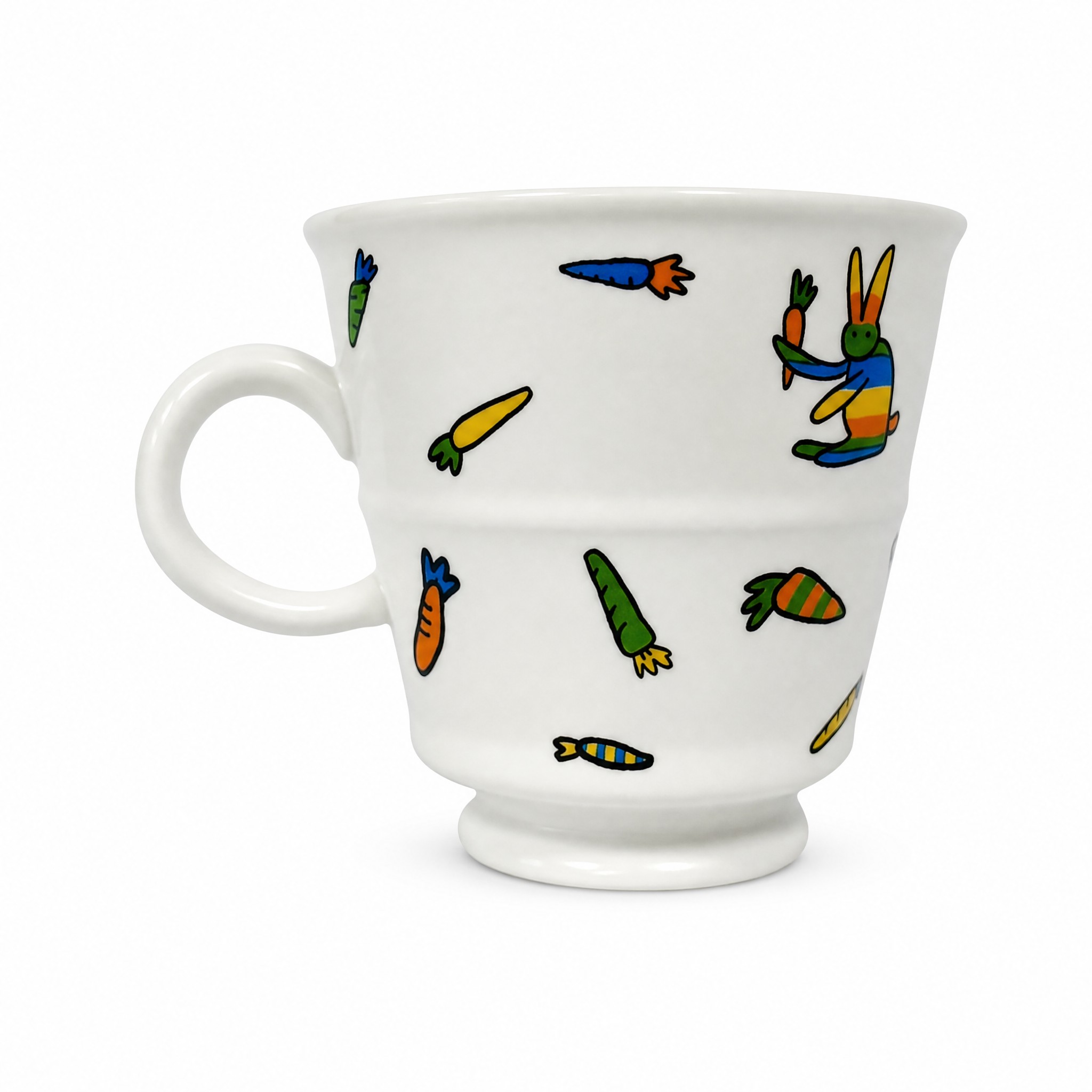
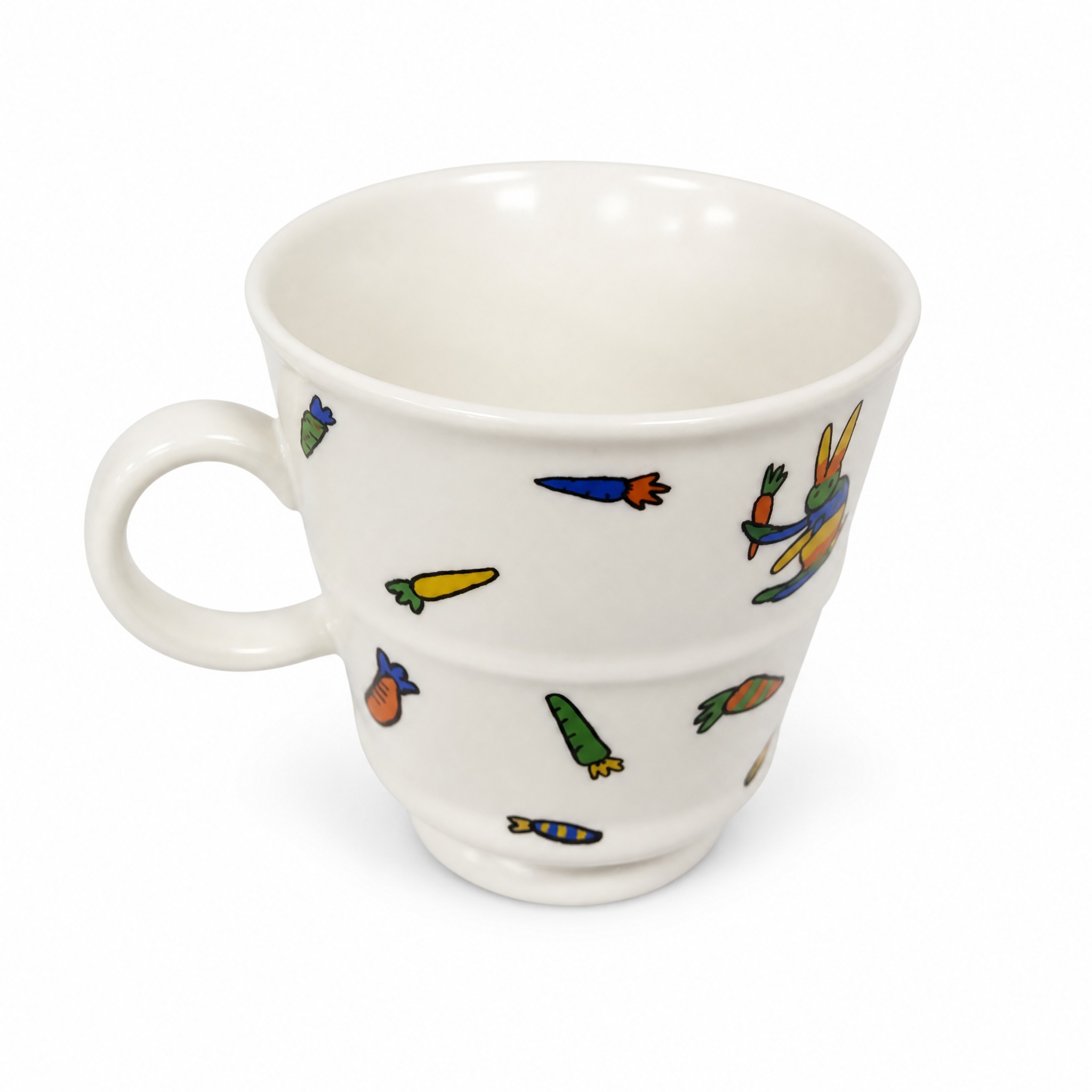
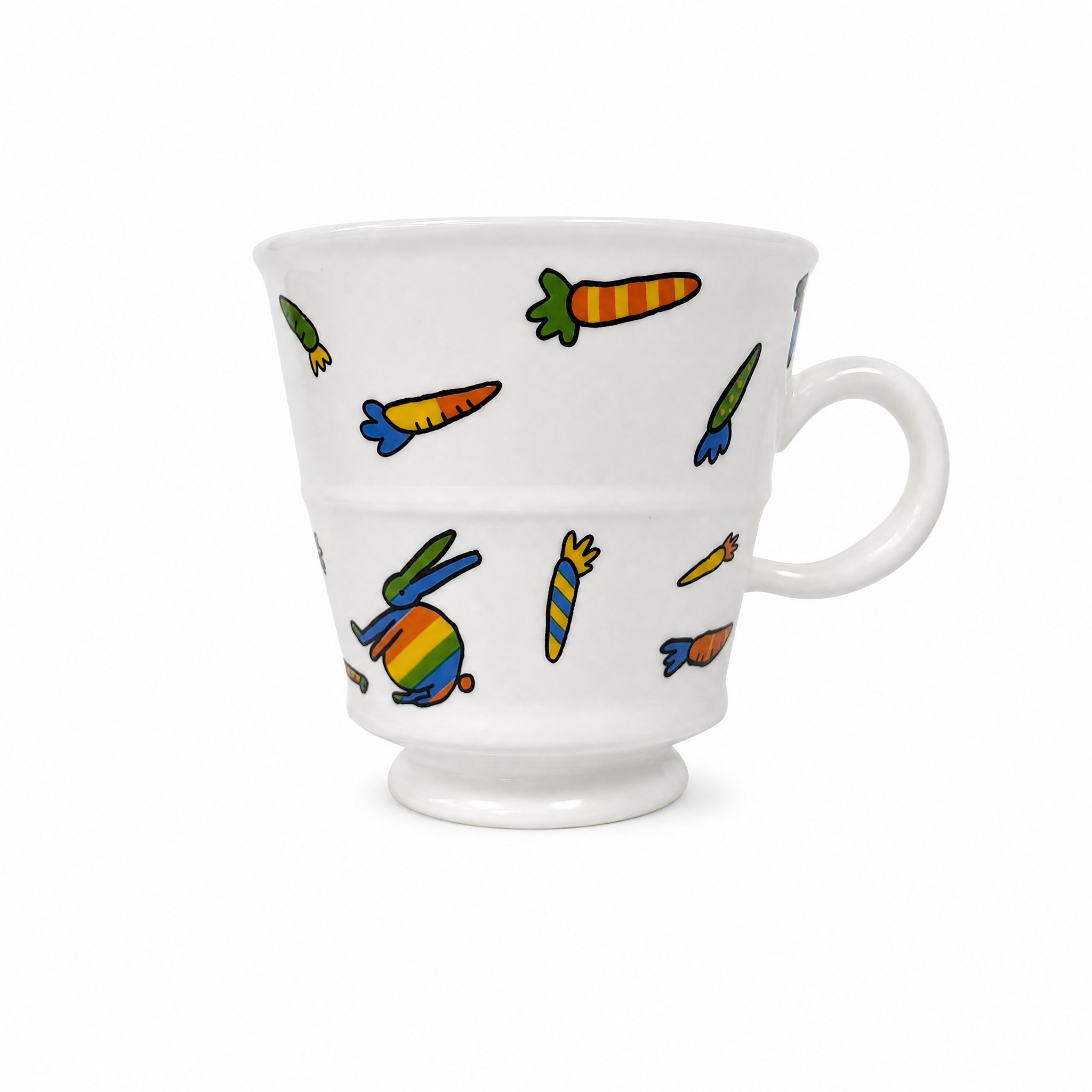
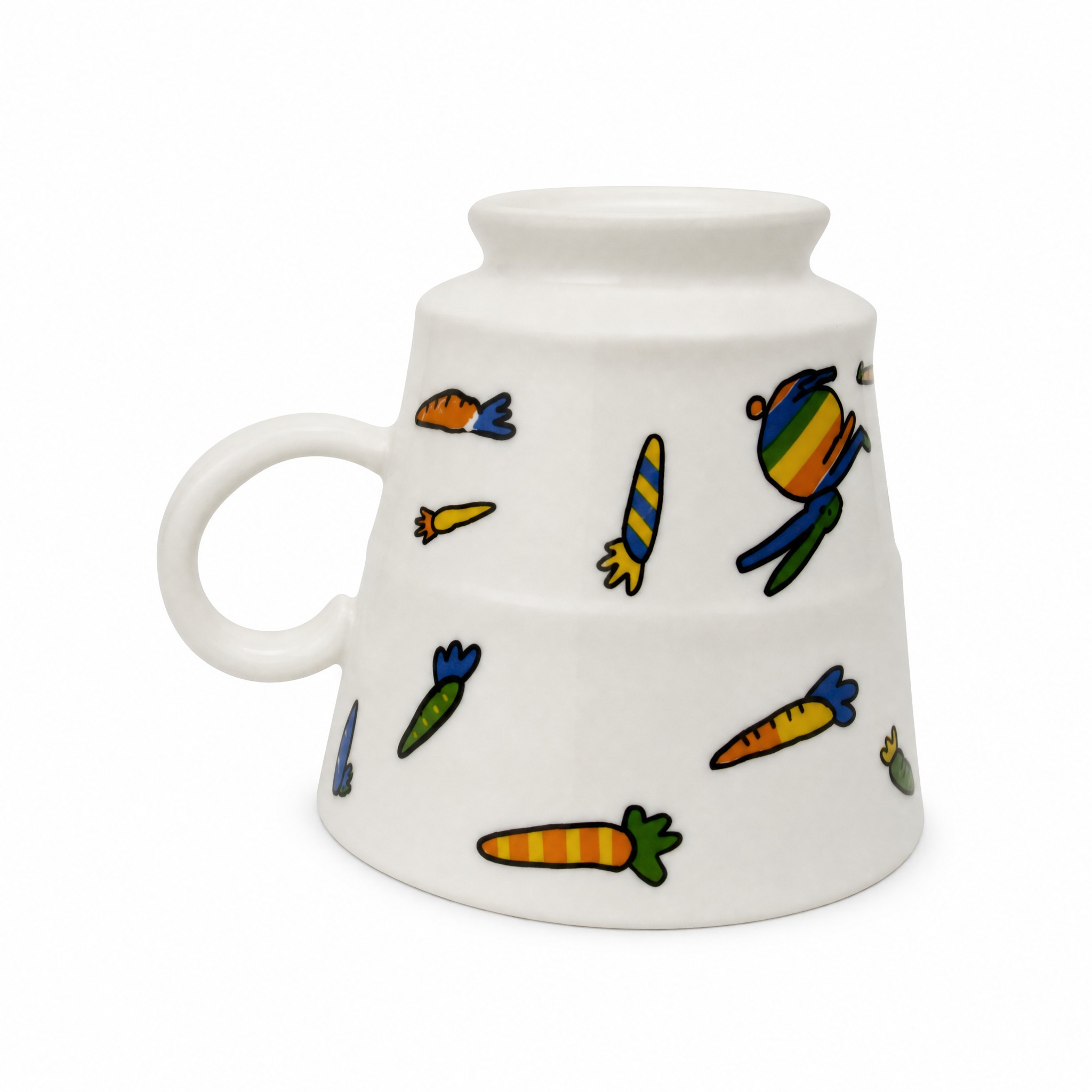
The Elegant Footed Stepped Ceramic Coffee Cup is a 240ml (8oz) high-fire porcelain cup that takes its language from classical European tableware and re-engineers it for a modern specialty café. A slender footed pedestal lifts the bowl off the saucer line, a two-tier stepped waist draws the eye upward and doubles as a thermal break, and a flared rim delivers the coffee onto the front palate where aromatics read first. The result is a cup that photographs like a gallery object and performs like production drinkware.
Made in Dehua, Fujian — the porcelain capital of China — by a direct manufacturer with low MOQ from 500 pcs and full OEM customisation of decal artwork, Pantone glaze and gift packaging.
Form Design Highlights
1. Elegant Footed Pedestal Base
A raised, slightly tapered foot ring replaces the conventional flat base. The pedestal gives the cup a lifted, ceremonial stance on the saucer or table, elevates the body so the hand can grip low without touching the warm wall, and presents the stepped waist at eye level on a retail shelf or in an Instagram flat-lay. Structurally, the foot is the strongest section of the casting: 5 mm at the bearing surface, radiused at the transition so the foot will not chip at the point where a normal cup foot fails first.
2. Dual Stepped Waist (Stepped Waist Profile)
Two machined steps are turned into the outer wall between the foot and the shoulder — one wide, one narrow. The stepped waist reads as an Art Deco detail, but it is functional first: it creates a tactile index for the fingers, breaks the visual mass so the cup looks taller and lighter than its 240ml volume, and hides glaze pooling lines that are visible on a plain cylinder wall. Both steps are radiused at 2 mm so they release cleanly from the mould and remain comfortable against the thumb.
3. Flared Rim (Flared Lip)
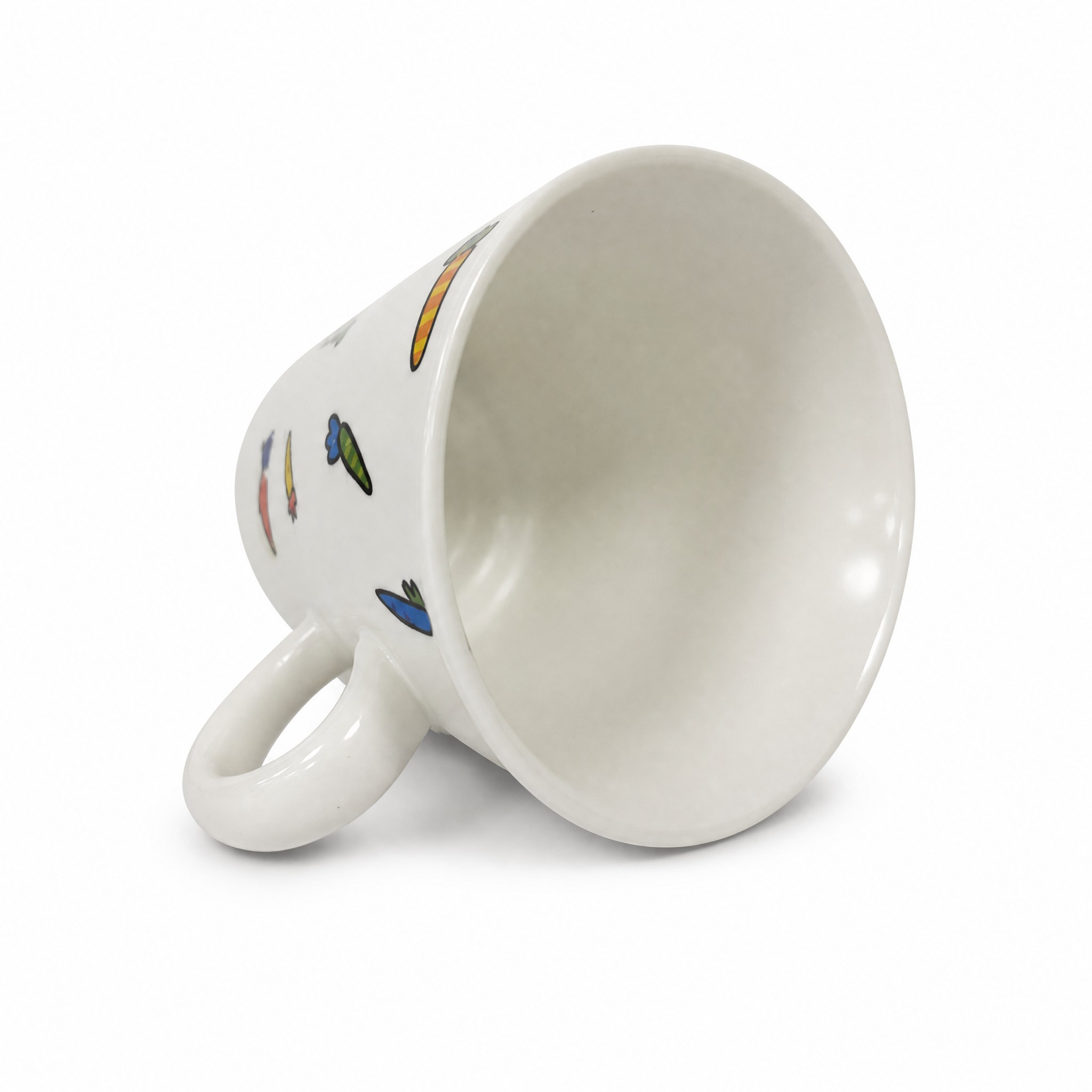
The rim opens outward in the last 8 mm, thinning to roughly 3 mm at the lip. A flared rim guides liquid to the front of the palate, which is why baristas describe it as a “slower, sweeter” sip; it also keeps the lip cool during service and gives the decal artwork a defined upper edge to terminate against.
4. Ergonomic Loop Handle
A circular loop handle with a 26×14 mm oval section, sized for a two-finger grip with a knuckle resting under the top of the loop. The attachment points are stepped and thickened so the pull load is spread over the widest part of the body — the standard failure point on thin handles — and the loop clears the stepped waist so the thumb never collides with the decoration band.
Material & Craftsmanship
Every cup is slip-cast in high-fire vitrified porcelain fired at 1310°C from low-iron Dehua kaolin. At that temperature the silica–alumina body closes almost all open porosity: water absorption tests below 0.2%, a dense bright-white body that is fully vitrified through the wall section, and a fired dimensional tolerance of about ±0.5%.
That neutral, iron-free white is the reason the cup can carry fine multi-colour decal printing. Because the body contributes no grey or warm cast under the glaze, a small amount of ceramic pigment reads cleanly and repeatably — we hold ΔE under 1.5 between production lots against an approved Pantone reference. Decals are applied either in-glaze (fired into the glaze layer at 1,100–1,150°C for a glass-smooth, dishwasher-proof surface) or over-glaze (fired at 820–850°C for maximum colour range), then checked for registration, edge sharpness and dishwasher resistance before packing. Glaze is lead- and cadmium-free and tested to FDA 21 CFR 175.300 / California Prop 65, with EU 1935/2004 and German LFGB migration reports available on request.
Specifications
| Parameter | Value |
|---|---|
| Rim diameter | 8.7 cm |
| Width incl. handle | 11.0 cm |
| Height | 8.3 cm |
| Capacity | 240 ml (8.1 oz) |
| Net weight | approx. 230 g |
| Body / firing | High-fire vitrified porcelain, 1310°C |
| Water absorption | < 0.2% |
| MOQ | 500 pcs |
| Carton | 36 pcs / export carton (customisable) |
OEM Customisation
- Custom brand illustration / logo decal — one to six colours, in-glaze or over-glaze, full wrap or single-position. Send vector artwork (AI/EPS/PDF) or we redraw from a reference; we return a decal proof and a fired sample cup for approval.
- Custom Pantone glaze dip — dip, spray or reactive glaze matched to your Pantone chip. Glaze trials are fired on the production body and measured (D65, 8° observer) so the approved L*a*b* value is repeatable across reorders.
- Custom gift box packaging — printed mailer, magnetic rigid box, moulded pulp insert, kraft sleeve, or retail-ready set with saucer. Barcode, FSC stock and drop-test reports available.
Engineering & Craft Guides
Two engineering decisions sit behind this cup: which body to fire, and how to tool the foot and handle. Our technical guides explain both.
Why a 1310°C white porcelain body holds fine decal colour
A bright, low-iron porcelain base is what makes multi-colour decal printing predictable — there is no grey or warm cast shifting the pigment, so the printed L*a*b* value is reproducible order after order. Our comparison of high-fire porcelain against mid-fire stoneware breaks down vitrification, water absorption and glaze chemistry: High-Fire Porcelain (1310°C) vs. Mid-Fire Stoneware: What’s Best for Custom Cafe Mugs?
Modelling the footed pedestal and loop handle for slip casting
The footed base, the two waist steps and the loop handle are the three features that decide the mould split. Draft angle, uniform wall section, the handle’s parting line and the radius where the handle meets the wall all have to be settled in CAD before tooling, or the casting will tear at the foot and drag at the handle root. The DFM rules we work to are set out here: How to Prepare 3D CAD Files for Ceramic Manufacturing
Tooling cost and how it is returned on volume
A new cup shape means a new master mould, case mould and (for a decorated programme) a decal screen set. Our cost breakdown shows what each element costs, why a handle plus a stepped waist pushes the mould count up, and how the tooling fee is amortised or rebated against production volume: Ceramic OEM Mold Costs Explained
Request a Quote
Ready to specify this cup for your brand? Tell us your target capacity, decoration artwork, Pantone references and expected annual volume, and our Dehua engineering team will come back with a mould plan, a decal proof schedule and a quotation within two business days.
Reviews
There are no reviews yet.